








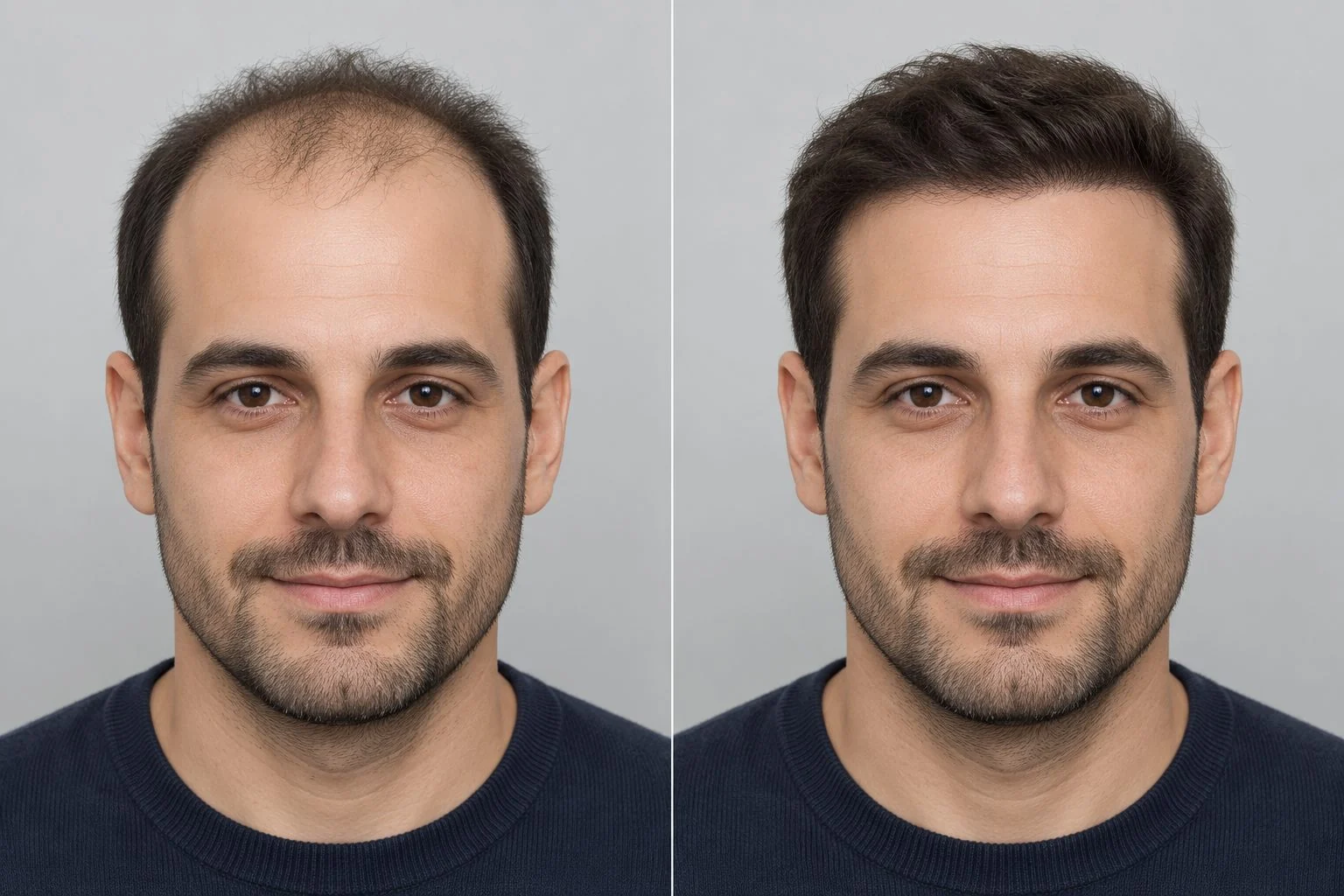
Who may consider it
A clinician should diagnose the hair loss and assess donor supply, progression and realistic coverage. Not all hair-loss conditions suit transplantation.
What the procedure involves
Follicles are typically collected from a donor area and placed into planned recipient sites. Ask who performs each surgical stage.
Recovery and results
Crusting and shedding may occur before new growth develops over months. Follow-up is needed to assess growth and ongoing native-hair loss.
Risks and limitations
Scarring, infection, uneven growth, shock loss and depletion of donor hair are possible.
Questions for your consultation
- What does DHI mean in your plan?
- Who performs extraction, incisions and implantation?
Medical information sources
Catalog prices are a guide. Your clinician assesses suitability, risks, recovery and final scope. MDTA coordinates online; the treating clinic provides medical care.